.png)
Printing is not an obscure corner of life. It is the story of life.
Printing and printed matter are the foundations of modern Western society. Printing museums like ours are not just accumulations of old machinery — they preserve the story of how the printed word built the world we live in.
From Gutenberg to the shores of Sydney Cove.
Gutenberg invented printing in the sense that he brought together and developed a number of separate processes which allowed modern printing to develop. But we should also give credit to the Reformation and to Martin Luther, whose conviction it was that everyone must know God personally — which meant everyone now had to read the Bible in their own language, and much else besides.
What began with religious works is now books of all kinds: newspapers, medical textbooks, even cook books. The Industrial Revolution kick-started the modern world — it was the Age of Improvement, and it was educated or perish.
There was an explosion of printing technology, from Mergenthaler and the Linotype to today’s digital presses. Colonialism carried printing — and the printed word — to the far-flung reaches of empires, including the shores of the prison settlement at Sydney Cove.
But printing is about more than reading a good book. Think jam labels — where would you be in the supermarket if everything was print-less? Think the paper jigglers on teabags. Think of the thousand and one printed items we use every day, even in this so-called digital age.
We preserve Australian printing history in our museum, and through stories told online.
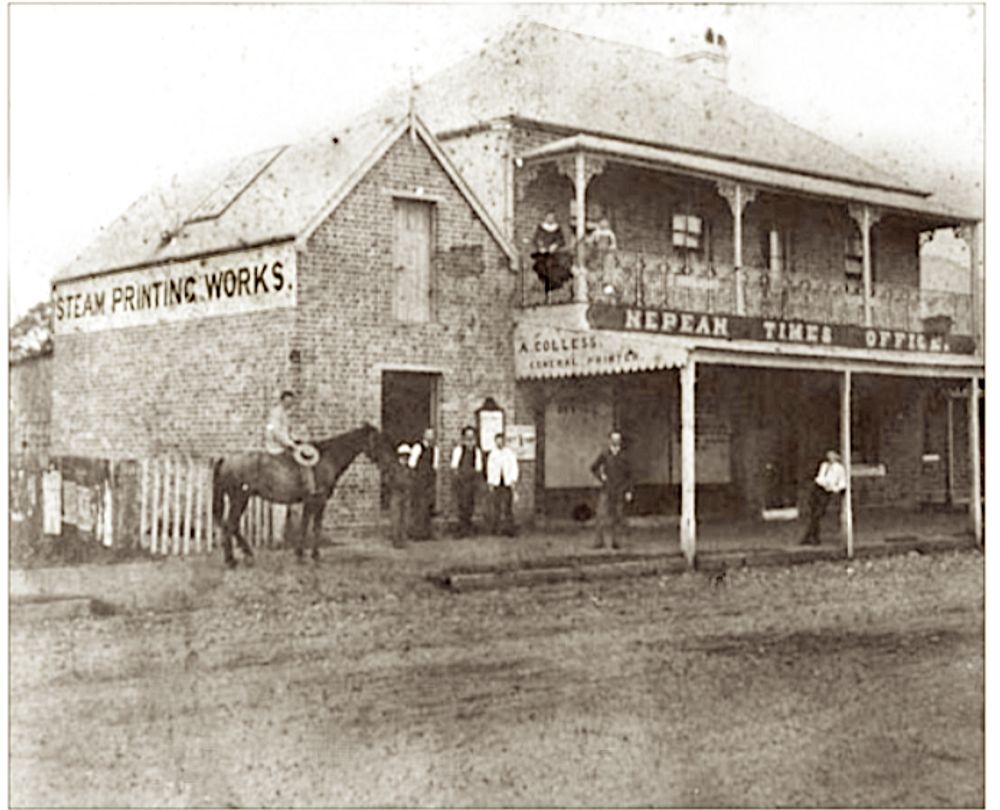
Built from the presses of the Nepean Times.
Established in 2001, the museum is modelled on a typical 1940s printing house. Its collection — machinery and equipment ranging from the mid-1840s to the 1970s — comes primarily from Penrith’s “Nepean Times” newspaper, together with printing establishments from throughout NSW.
Our founder, Mr Alan Connell, laboured for many years to build a “working museum” capable of showcasing fully operational printing equipment — original copy turned into lead type on the Linotype and by hand at the compositor’s case, then printed by machinists on presses small and large.
begin their working lives
prints Penrith’s news
our museum recreates
in Penrith, NSW
Stories from the trade
TOLD BY THE PRINTERS WHO LIVED ITGraham Elphic’s Story
A printer’s life in the trade, in his own words.
P. Jeff Wallece, “the newspaper man”
From country newspapers to the city presses.
Herbert Gilbert, “The Paper Man”
A life measured in reams and rolls.
Diary of a Letterpress Printer
Day by day at the case and the press.
Printing in Australia before WWI
The industry that built a young nation’s voice.
The Museum in the Movies
When film crews come calling for authentic presses.
Fresh off the press, straight to your inbox.
Workshop dates, open days and news from the print room — a few times a year, no more.

A not-for-profit incorporated association keeping the history, knowledge and skills of letterpress printing alive. Penrith Paceway, Mulgoa Rd & Ransley St, Penrith NSW 2750.